


Padel can look wonderfully simple when the ball starts flying, but the scoring can feel like a puzzle the first few times you watch or play. The court is smaller, the rallies are faster, and the scoring system borrows from tennis while still carrying its own match rhythm. That combination often makes beginners unsure whether they are tracking points, games, or sets at any given moment. Once the structure clicks, though, padel scoring becomes one of the easiest parts of the sport to follow. This guide breaks everything down clearly so you can understand what is happening in real time and feel more confident during every match.
At its core, padel scoring is built around a layered system that moves from points to games, then games to sets, and finally sets to the match result. Each layer has a specific purpose, and each one changes how players think about momentum, pressure, and strategy. A single lucky shot does not win a match, but it can shift a point, which can shift a game, which may eventually change a set. That is why learning the scoring structure is so useful for players and spectators alike. It gives you a practical lens for understanding why teams suddenly slow down, attack more aggressively, or fight extra hard at deuce.
How Padel Scoring Works
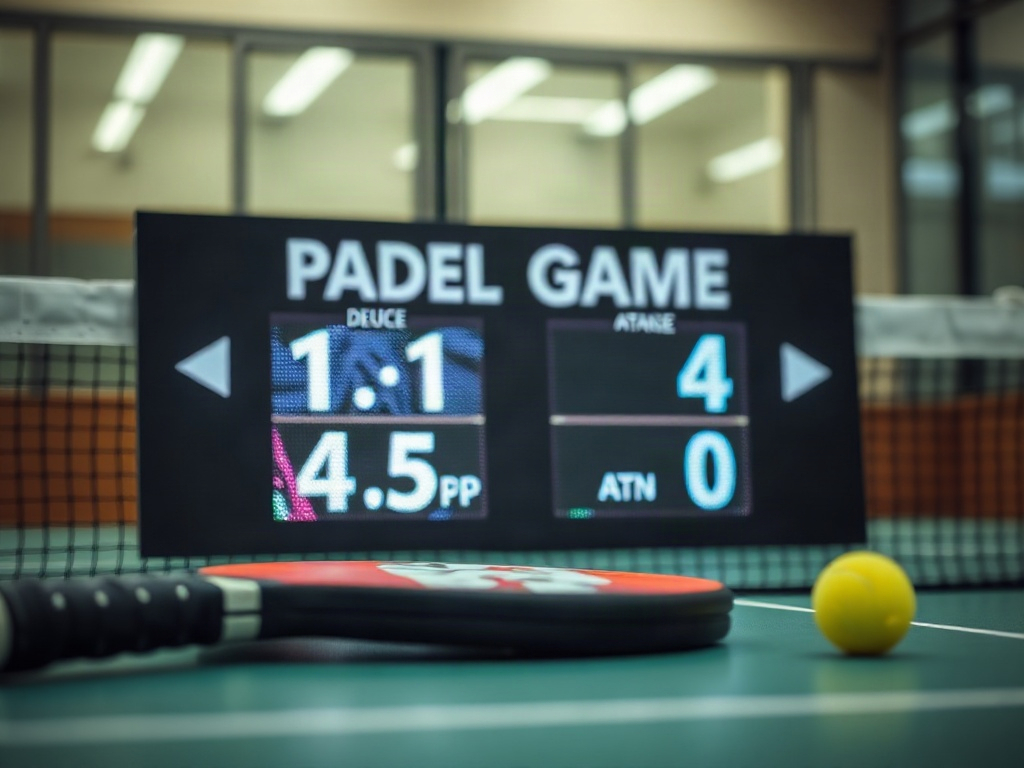
Padel uses a tennis-style scoring format, which means the match is decided through points, games, and sets rather than through a simple running total. Two players team up against two others, and every rally produces one point for one side. When a team collects enough points with the required margin, it wins a game, and enough games lead to a set. Most matches are played as best of three sets, so a team usually needs two sets to win the match. Once you understand that progression, the whole system becomes much easier to follow.
What makes padel scoring especially interesting is that the score does not move in a straight numerical sequence the way many beginners expect. Instead of 1, 2, 3, 4, the points move through familiar tennis terms such as love, 15, 30, and 40. This can feel unusual at first, but it becomes natural very quickly once you see it in action. Because of that format, the game has a strong sense of tension and reset at key moments. Every new point matters, yet the scoreboard still gives players room to recover from a slow start.
Points in Padel

A single point in padel is the smallest scoring unit, but it often carries the most pressure. Points are counted as love, 15, 30, and 40, with the next point usually winning the game if the team is ahead by two points or more. If both sides reach 40, the score becomes deuce, and the game enters a more dramatic phase where advantage becomes important. This unusual point structure is one of the biggest reasons padel feels tactical from the very beginning. Players are constantly balancing risk and control because one rally can change the entire shape of a game.
Although the terminology may seem old-fashioned, it actually serves the pace of the sport quite well. The score jumps in a way that keeps games compact and intense without making them too long. It also creates a psychological rhythm, because teams know when they are close to closing out a game or when they are under pressure to recover. In many matches, a few key points decide the momentum even when both teams play at a similar level. That is why understanding the scoring language is essential before focusing on advanced tactics.
A point is won when the opposing team fails to return the ball legally, makes an error, or cannot keep the rally alive. Common point-winning situations include an unforced mistake, a smash that cannot be returned, a ball that bounces twice, or a shot that lands outside the court boundaries. The serve also matters, because a fault or double fault can immediately hand the point to the return team. Since padel is played with walls, some points end with long exchanges that would not happen in many other racket sports. That makes each point feel like a mix of patience, precision, and timing rather than pure power alone.
- A point can end with a clean winner that the other team cannot reach.
- A point can be lost through an error such as hitting out or into the net.
- A serve fault can reduce the serving team’s chance to control the rally.
- A double fault gives the point directly to the return team.
- Long rallies often end when one side finally creates an opening and attacks it.
Games in Padel
A game is won when a team reaches the necessary point total and maintains the required margin over the opponents. In most cases, that means winning four points before the other team does, provided the margin is at least two points. If both teams reach 40, the game does not end immediately, because the score must be broken through deuce and advantage. This is where padel becomes especially exciting, because a game that looked nearly finished can suddenly swing back and forth. The game score acts as the middle layer between individual rallies and the larger structure of the set.
Games matter because they create the visible momentum of a set. A team may not dominate every rally, but winning key games at the right time can put real pressure on the opponents. In practical terms, a player can lose several points and still win the game if they capture the critical moments. That is why padel rewards composure, especially when the score is close. Understanding games helps you see that the match is not just about winning points, but about converting pressure into results.
When both teams reach 40, the game moves into deuce, which means the score is tied and one team must win two points in a row to close the game. The first point after deuce gives that team advantage, and if they win the next point as well, they win the game. If the team with advantage loses the next point, the score returns to deuce and the battle continues. This phase can repeat several times in a single game, which is why close matches often feel mentally exhausting. Deuce tests patience as much as technique, because one loose shot can undo several good rallies.
| Score Stage | What It Means | What Happens Next |
|---|---|---|
| Love | No points yet | The next rally can change the score immediately |
| 15 | One point won | The team is one step closer to winning the game |
| 30 | Two points won | The game is getting close, but it is not over |
| 40 | Three points won | The next point may decide the game unless deuce occurs |
| Deuce | Score is tied at 40-40 | One team must win two points in a row |
Sets in Padel
A set is made up of games, and a team usually wins a set by reaching six games while also leading by at least two games. If the score becomes close, the set can stretch longer until one team creates the necessary gap. Sets are important because they separate short-term pressure from match-winning consistency. A team can lose a few games early and still recover later in the set, which keeps matches competitive. In this way, the set is the part of padel scoring that most clearly reveals which pair is managing the match well.
Sets also shape the emotional rhythm of the contest. Some teams build confidence gradually, winning important games after surviving difficult service holds. Others rely on early pressure and try to run away with a set before the opposition settles in. Because padel is often played in best-of-three-set matches, every set carries major weight. Winning the first set can create psychological control, while losing it can force a team to become more aggressive or more patient depending on the situation.
The standard route to winning a set is reaching six games with a two-game lead, such as 6-4 or 6-2. If the set reaches 6-5, the trailing team still has a chance to catch up, and if the score reaches 6-6, a tie-break is usually played. That means the set does not always end cleanly at six games, even though six is the target number. This structure keeps sets from dragging too long while still rewarding consistent play. It also creates a dramatic finish when both teams are evenly matched.
- Win six games and lead by two to take the set directly.
- If the score reaches 6-6, a tie-break is usually played.
- Momentum can swing quickly if a team breaks serve at the right moment.
- Holding serve becomes crucial in tight sets.
- One late game can change the entire shape of the set.
Tie-Breaks in Padel
A tie-break is used when a set reaches 6-6 and neither team has been able to create the two-game lead needed to finish it. It is a special scoring phase designed to decide the set efficiently while keeping the match fair and competitive. In a tie-break, the counting changes again, and points are usually tallied in simple numbers instead of the usual love, 15, 30, and 40 system. This makes the tie-break feel faster and more direct than a normal game. It is often one of the most nerve-racking parts of a match because every point carries extra significance.
Tie-breaks are where players must stay calm under pressure. The score can move quickly, but the margin can also disappear almost instantly if a team loses focus. Since both sides are so close in level at that stage, small details often decide the outcome. A strong serve, a cautious return, or a well-timed volley can be enough to turn the tie-break. Understanding how it works removes much of the confusion and lets you enjoy the tension instead of being distracted by the scorekeeping.
In most padel tie-breaks, the first team to reach seven points with at least a two-point lead wins the tie-break and therefore the set. Serving order is structured so that each player gets turns according to the tie-break rotation rules, and the serve changes after short sequences of points. This rotation helps keep the tie-break balanced and prevents one team from holding the serve throughout. Because points are counted numerically, it is easier to track who is ahead and how close the set is to ending. Even so, the pressure can make the score feel faster than it looks on paper.
- The tie-break begins at 0-0.
- Points are counted as regular numbers, not 15, 30, or 40.
- The first team to reach seven points with a two-point lead wins.
- Serving changes according to tie-break rotation rules.
- If the score is close, the tie-break continues until one team leads by two.
Common Padel Scoring Terms
Knowing the most common scoring terms makes padel much easier to follow during live play. Words like love, deuce, advantage, and break point are used constantly by players, coaches, and commentators. Love simply means zero, while deuce indicates a tie at the critical stage of a game. Advantage means one team is one point away from winning the game after deuce. Break point refers to a chance for the return team to win the game on the opponent’s serve, which can be a major moment in the set.
These terms are useful because they describe situations more precisely than the raw score alone. When someone says a team has break point, for example, it tells you that the next rally could change not just a game, but also the balance of the set. That is especially important in padel, where holding serve is valuable and breaking serve can be a decisive advantage. The more familiar you are with these phrases, the easier it becomes to understand pressure moments in a match. Over time, the language becomes second nature and helps you read the flow of play more intelligently.
- Love: zero points.
- Deuce: a tied score at 40-40.
- Advantage: the next point after deuce puts one team one step from winning.
- Break point: a chance to win a game on the opponent’s serve.
- Hold: winning a game while serving.
Common Mistakes Beginners Make
One of the most common beginner mistakes is mixing up points, games, and sets. A player may hear “40-30” and think it represents a large lead, when in fact it is only one point away from a game-ending moment. Another frequent confusion happens at deuce, where many new players assume the next point automatically wins the game. Tie-breaks can also be misunderstood, especially because the scoring switches from the usual system to a numerical count. These mistakes are normal at first, but they disappear quickly once the structure becomes familiar.
Another issue is not realizing how much serve matters in padel scoring. Beginners often focus on winning rallies but overlook the strategic importance of holding serve, especially in close sets. They may also panic when the score tightens, even though deuce and advantage are simply part of the game’s normal rhythm. Once you accept that pressure moments are built into the format, the scoring starts to feel logical rather than confusing. The best way to avoid these mistakes is to follow the score slowly for a few matches until the patterns become automatic.
Итог
Padel scoring becomes easy to understand once you see how the layers connect. Points create games, games create sets, and sets decide the match, with deuce and tie-breaks adding the moments of highest pressure. The system may seem unusual at first because of its tennis-style terminology, but that structure is exactly what gives padel its rhythm and tension. As soon as you recognize how the score moves, matches become much more enjoyable to watch and play. Instead of feeling lost, you can track momentum with confidence and appreciate the strategy behind every rally.
If you remember only a few essentials, make them these: points are counted in a special sequence, a game needs a two-point margin, a set usually goes to six games with a two-game lead, and a tie-break settles the set at 6-6. Those four ideas explain almost everything you need during a match. With this guide in mind, you will be able to follow the scoreboard without hesitation. You will also understand why players react so strongly to certain moments and why even one point can change the entire match narrative. That is the real value of learning padel scoring well.
Часто задаваемые вопросы
- How many points do you need to win a game in padel?
You usually need to win four points and be at least two points ahead of your opponents. If both teams reach 40, the game goes to deuce and one team must win two points in a row. - What happens at deuce in padel?
At deuce, the score is tied at 40-40. One team must win a point to gain advantage, and then win the next point to take the game. - How many games are needed to win a set in padel?
A set is usually won by the first team to reach six games, provided they lead by at least two games. If the score reaches 6-6, a tie-break is usually played. - What is a tie-break in padel?
A tie-break is a special scoring game played when a set reaches 6-6. It is usually won by the first team to reach seven points with a two-point lead. - Is padel scoring the same as tennis?
Padel uses a very similar scoring system to tennis, including points, games, sets, deuce, and tie-breaks. The main difference is the court, the walls, and the style of play.